Expectations quietly shape how you experience Life, Relationships, success, and change. They can inspire Hope, yet they can also bring Disappointment when reality takes a different path. The best expectations quotes offer simple reminders about accepting uncertainty, managing emotions, and finding balance between dreams and facts. Whether you’re dealing with unmet expectations, relationship struggles, or a difficult life transition, the right words can shift your perspective.
This collection of 100+ powerful expectations quotes explores love, reality, disappointment, personal growth, and letting go. Each quote offers a thoughtful reminder to stay grounded while keeping your heart open to possibilities. Sometimes, peace begins when expectations stop controlling your happiness.
What Are Expectations? Understanding Their Meaning in Life
Expectations are beliefs about what you think should happen. They can come from past experiences, personal wishes, social pressure, or ideas about the future. Life expectations may involve careers, relationships, money, family, or personal achievement. When events match those beliefs, you may feel satisfied. When they don’t, frustration can quickly appear.
The difference between reality and expectations often creates emotional tension. Healthy expectations can encourage Growth and effort. However, unrealistic expectations can make ordinary problems feel much larger. Understanding the expectations vs reality concept helps you separate what you want from what you can actually control. That awareness creates Self-awareness, Clarity, and emotional stability.
Types of Expectations That Shape Everyday Life
You may have expectations about yourself, your partner, friends, career, family, or the future. Some expectations become realistic expectations because they match circumstances and effort. Others become rigid demands. For example, expecting respect in a relationship is reasonable. Expecting another person to understand every thought without communication is not.
Why Do Expectations Lead to Disappointment?
Disappointment often begins when an expected outcome fails to appear. You imagined one result. Life delivered another. The resulting emotional pain can feel especially strong when you invested time, trust, or hope into that outcome. This explains why unmet expectations can hurt more than ordinary setbacks.
The gap between expectations and reality becomes wider when expectations are unrealistic. High expectations aren’t always harmful. They become troublesome when they ignore circumstances, human limitations, or uncertainty. Learning to adjust expectations doesn’t mean giving up. It means creating balanced expectations that leave room for change, mistakes, and unexpected outcomes.
Expectations vs. Reality: Why the Gap Hurts
Imagine expecting a friend to call every day. When they become busy, you may feel ignored. Yet they may never have promised daily contact. The pain came partly from an assumption. Recognizing this pattern can reduce stress, frustration, and unnecessary emotional struggles.
Best Quotes About Expectations and Disappointment

These expectations and disappointment quotes explore the difficult space between hope and reality. They focus on broken promises, unmet needs, emotional pain, and the lessons hidden inside difficult experiences. Sometimes disappointment feels like a dead end. Later, it can become a doorway to Wisdom.
“Disappointment begins where an unspoken expectation meets reality.”
“The higher the imagined outcome, the harder the unexpected truth can feel.”
“Unmet expectations can hurt, but they can also reveal what matters.”
“Broken expectations often expose assumptions you never questioned.”
“Reality may disappoint your plans without disappointing your life.”
“A painful outcome can still carry a valuable lesson.”
“Don’t let one disappointment define every future possibility.”
“Sometimes the answer arrives disguised as a changed expectation.”
“Broken hopes can become foundations for stronger wisdom.”
“Pain teaches what comfort sometimes hides.”
“Disappointment is painful, but permanent bitterness is optional.”
“When expectations break, clarity often enters through the cracks.”
“You cannot control every outcome, but you can control your response.”
“High expectations can inspire you, but rigid expectations can imprison you.”
“Some emotional scars begin with expectations nobody agreed to meet.”
“The heart hurts most when imagination feels more certain than reality.”
“Let disappointment inform you without allowing it to define you.”
“An unmet expectation is information, not always rejection.”
“Reality doesn’t owe every dream the ending you imagined.”
“Sometimes letting go hurts less than holding onto an impossible outcome.”
Deep Quotes About Unmet Expectations
Broken expectations deserve reflection rather than shame. They can reveal hidden assumptions and unrealistic standards. They can also show where better communication is needed. Instead of asking why reality refused to cooperate, ask what the experience can teach about Truth, boundaries, and emotional needs.
Powerful Quotes About Expectations in Life
Life rarely follows a perfectly drawn plan. Careers change. Relationships evolve. Opportunities disappear. New ones arrive without warning. That uncertainty makes expectations about the future difficult to manage. Strong people don’t avoid planning. They simply leave enough space for life to surprise them.
“Life becomes lighter when plans guide you without controlling you.”
“Expect effort from yourself, but leave room for unexpected results.”
“Reality teaches lessons that expectations cannot predict.”
“A flexible plan survives where a rigid expectation breaks.”
“Your future deserves hope, not a script.”
“Progress begins when perfection stops controlling the journey.”
“Let your goals be strong and your expectations flexible.”
“Life is not late because it follows a different timeline.”
“A different path can still lead to a meaningful destination.”
“Success is often built through outcomes you never expected.”
“Patience makes room for possibilities that hurry cannot see.”
“Your timeline is a guide, not a verdict.”
“Unexpected turns can become important chapters.”
“Life rewards effort, but it doesn’t always follow predictions.”
“You can prepare for tomorrow without demanding that tomorrow obey you.”
“Growth often begins where certainty ends.”
“The best lessons sometimes arrive through plans that fail.”
“Expect progress, not perfection.”
“Hope for the best while staying grounded in reality.”
“A peaceful life needs goals, flexibility, and gratitude.”
“Not every delay is a denial of your potential.”
“Success and expectations become healthier when effort matters more than applause.”
“Your worth doesn’t rise or fall with one outcome.”
“Steady progress is more valuable than perfect timing.”
“A realistic goal can inspire without creating unnecessary pressure.”
“Life becomes manageable when expectations make room for uncertainty.”
Expectations, Reality, and Life Lessons
The healthiest approach combines ambition with Balance. Set achievable goals. Work hard. Learn from mistakes. At the same time, remember that outcomes depend on more than effort alone. Expectations and effort should work together rather than compete. This creates a grounded mindset and supports long-term success.
Inspirational Quotes About Expectations in Relationships
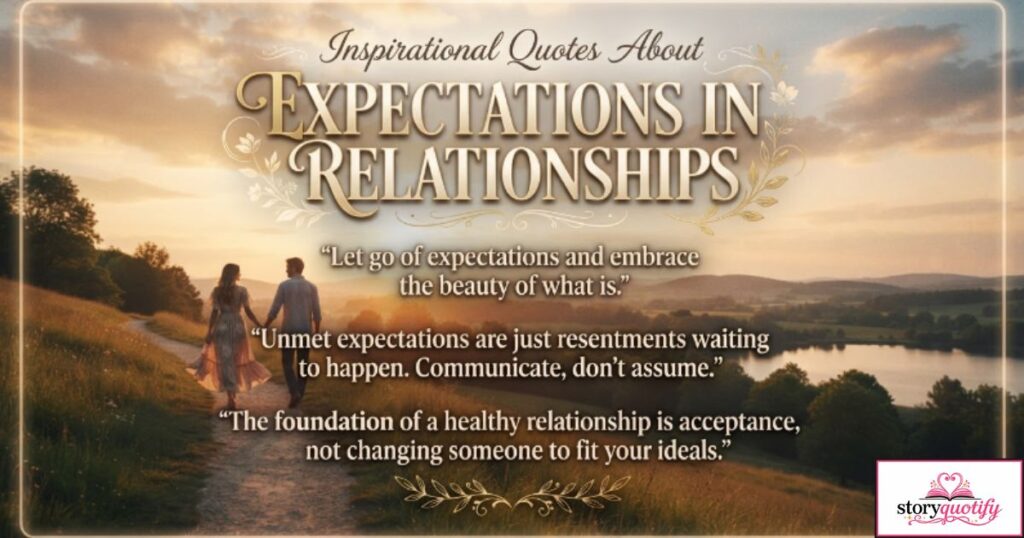
Relationships can become difficult when expectations remain unspoken. You may expect attention, loyalty, affection, support, or commitment. Those needs can be completely valid. Problems arise when you expect another person to guess them. Clear Communication turns assumptions into conversations and creates healthier mutual expectations.
“Healthy love needs communication more than mind-reading.”
“Expect respect, but don’t demand perfection.”
“Love becomes stronger when needs are spoken with kindness.”
“A partner cannot meet an expectation they never understood.”
“Trust grows when expectations are clear and mutual.”
“Real connection leaves room for two imperfect people.”
“Don’t expect someone to love exactly as you love.”
“Respect is a reasonable expectation in every healthy relationship.”
“Unconditional love does not require unconditional tolerance of harmful behavior.”
“Love without understanding can become a collection of assumptions.”
“Healthy boundaries protect love from unrealistic expectations.”
“A strong relationship makes room for difference.”
“Expectations should create understanding, not silent tests.”
“Trust cannot grow where every mistake becomes a betrayal.”
“Accepting people as they are doesn’t mean accepting poor treatment.”
“Love needs honesty more than impossible standards.”
“The best relationships balance freedom with commitment.”
“Mutual expectations create stability when both people understand them.”
“Broken trust needs truth, time, and consistent action.”
“Don’t punish someone for failing a test they never knew existed.”
“Love becomes peaceful when comparison leaves the room.”
“Healthy relationship expectations protect dignity on both sides.”
“People can love you deeply and still have human limitations.”
“Expect support, but remember that people have limits too.”
“Emotional connection grows through presence, honesty, and respect.”
“Expecting perfection can make you overlook genuine goodness.”
Love, Trust, and Expectations From Others
Love and expectations can coexist. The goal isn’t to expect nothing. It is to create realistic relationship expectations around respect, honesty, safety, communication, and commitment. Unconditional love without expectations may sound beautiful, yet healthy relationships still need boundaries and mutual responsibility.
Quotes About Letting Go of Expectations and Finding Peace
Sometimes the wisest decision is letting go. This doesn’t mean becoming careless. It means releasing the belief that every person, event, or outcome must match your preferred version. Acceptance creates space for reality. It can also reduce emotional pressure and restore Peace.
“Letting go begins when control ends.”
“Peace arrives when reality no longer has to match your imagination.”
“Release expectations that were never yours to control.”
“Acceptance doesn’t erase the past; it changes your relationship with it.”
“You can care deeply without controlling the outcome.”
“Let reality unfold without forcing every chapter.”
“Sometimes peace means expecting less and noticing more.”
“Let go of the ending you planned when life offers another beginning.”
“Acceptance creates space where resistance once lived.”
“You don’t have to understand everything before choosing peace.”
“Stop expecting yesterday to explain tomorrow.”
“Freedom begins when you stop demanding certainty from an uncertain world.”
“Trust the journey without pretending every step will feel easy.”
“Peace and acceptance grow when control becomes less important.”
“Living in the present is easier when tomorrow loses its grip.”
“Letting go is not losing; sometimes it is returning to yourself.”
“Release what you cannot change and strengthen what you can.”
“A calm mind does not need every answer immediately.”
“You can hope for something without becoming dependent on it.”
“Emotional freedom grows when expectations become flexible.”
“The lighter your grip, the more room life has to surprise you.”
“Acceptance is not surrender. It is seeing clearly.”
“Sometimes the healthiest expectation is simply openness.”
“Peace begins when you stop arguing with facts.”
Acceptance and Emotional Freedom
Letting go of expectations can support inner peace, but it shouldn’t become an excuse to ignore problems. If someone repeatedly disrespects you, acceptance should not replace boundaries. Instead, acceptance means seeing the situation clearly. Then you can choose the healthiest response without being trapped by denial.
How to Manage Expectations in Real Life
Managing expectations starts with Self-awareness. Notice what you expect and why you expect it. Ask whether the expectation comes from reality, experience, fear, comparison, or social pressure. Then separate what you can control from what belongs to other people or circumstances.
Practical expectations work best when they match facts and effort. Communicate important needs instead of relying on silent assumptions. Focus on action over expectations. Practice Gratitude for what exists while still working toward improvement. This creates emotional stability without requiring you to lower every standard.
Practical Ways to Build Realistic Expectations
A simple approach can make a major difference.
| Situation | Unhelpful expectation | Healthier approach |
|---|---|---|
| Relationships | “They should know what I need.” | Communicate clearly. |
| Career | “Hard work guarantees success.” | Focus on effort and learning. |
| Friendship | “A real friend is always available.” | Value consistency and understanding. |
| Personal growth | “I should never fail.” | Accept progress and mistakes. |
| Future plans | “Everything must happen on time.” | Prepare while staying flexible. |
The goal isn’t to lower expectations until nothing matters. The goal is to make them realistic enough to support Personal development and Self-improvement.
How Expectations Quotes Can Change Your Perspective

A short quote can interrupt a long negative thought. That makes meaningful motivational expectations quotes useful during difficult moments. Reading a thoughtful line can help you pause before reacting. It can remind you that one disappointing event doesn’t necessarily describe the whole situation.
Quotes can also support journaling and daily reflection. Write down a sentence that resonates with you. Then connect it to something happening in your life. Over time, this practice can strengthen a growth mindset, improve emotional awareness, and encourage healthier responses to uncertainty.
When to Use Expectations Quotes
Expectations quotes can be useful after disappointment, during relationship problems, after a breakup, or while facing a career setback. They also work well as reminders during quiet reflection. Short sayings can make useful Instagram captions when they express a genuine feeling rather than simply sounding dramatic.
Questions to Ask Yourself About Your Expectations
Before reacting to disappointment, pause for a moment. Ask what you actually expected. Then ask whether anyone promised that outcome. This small distinction can reveal whether you’re facing genuine mistreatment or simply struggling with a difference between desire and reality.
Reflection also creates Mental strength. You begin noticing patterns instead of repeating them automatically. Perhaps you expect perfection from yourself. Perhaps you expect others to behave exactly as you would. Honest questions can reveal those patterns and make overcoming disappointment easier.
Self-Reflection Questions for a Healthier Mindset
Are my expectations realistic? Am I expecting someone to read my mind? Am I confusing standards with perfection? What can I actually control? What part of this situation is based on assumption? What can this disappointment teach me? Would acceptance reduce unnecessary stress? What would change if I allowed life to unfold differently?
FAQs About Expectations, Disappointment and Letting Go
What is a good quote about expectations?
A useful reminder is: “Let your goals be strong and your expectations flexible.” It captures the idea that ambition and acceptance can coexist. You can work toward meaningful goals without assuming that every outcome will happen exactly as planned.
Why do expectations cause disappointment?
Expectations cause pain when reality differs sharply from what you imagined. The stronger the emotional attachment, the greater the potential hurt. High expectations and disappointment often become connected when assumptions replace communication or when outcomes remain outside your control.
Is it better to have no expectations?
Having no expectations isn’t always practical. Healthy expectations provide direction and protect important values. The better goal is balanced expectations. Expect honesty, respect, effort, and reasonable behavior. Leave uncertain outcomes open to change.
How do you stop expecting too much from people?
Start by separating needs from assumptions. Communicate important needs clearly. Notice whether someone has actually promised what you expect. Finally, accept that Human behavior varies. People have different abilities, priorities, personalities, and limitations.
How can you lower expectations without lowering your standards?
Standards describe what you consider acceptable. Expectations often describe what you predict another person will do. You can maintain strong standards while releasing unrealistic predictions. For example, you can require respect without expecting someone to behave perfectly every day.
What is the difference between expectations and standards?
An expectation is a belief about what will happen. A standard is a principle about what you will accept or pursue. That distinction matters. You can change an expectation when circumstances change while keeping an important standard firmly in place.
How do you let go of expectations in a relationship?
Start with honest communication. Identify which expectations are essential and which are assumptions. Discuss boundaries, affection, communication, trust, and commitment. Then allow reasonable differences. Acceptance doesn’t mean ignoring serious problems. It means seeing the person and relationship clearly.
Conclusion
The deepest expectations quotes share one simple lesson: life becomes easier when hope and reality can coexist. Expectations can motivate you. They can also create frustration when they become rigid. The healthiest approach is not to expect nothing. It is to expect wisely.
Real peace comes from combining Truth, patience, effort, and acceptance. Set meaningful goals. Maintain healthy boundaries. Communicate your needs. Learn from broken hopes. Most importantly, leave room for life to surprise you. When expectations become flexible, disappointment becomes easier to process and growth becomes easier to recognize.
“Expect with hope, act with purpose, and accept what you cannot control.”
“Peace begins when reality no longer needs your permission to be real.”
“Let your expectations guide your choices, not control your happiness.”
“A balanced life makes room for ambition and acceptance.”
“You can want more from life without rejecting what exists today.”
“The strongest mindset is hopeful without being dependent on outcomes.”
“Growth begins when disappointment becomes information.”
“Acceptance turns resistance into clarity.”
“Protect your peace without abandoning your standards.”
“Expect progress, practice patience, and leave room for possibility.”
“Life becomes lighter when you stop demanding certainty from uncertainty.”
“Your expectations are yours to examine, adjust, and understand.”
“Let reality teach you without letting disappointment harden you.”
“A peaceful heart can hold hope without holding tightly.”
“Sometimes letting go creates the space where better things can grow.”
“Wisdom is knowing when to hold on and when to release expectations.”
“The future becomes less frightening when you stop trying to script it.”
“You cannot control every outcome, but you can choose your attitude.”
“Acceptance doesn’t make life smaller. It makes your vision clearer.”
“The less you fight reality, the more energy you have to shape it.”
“Healthy expectations create direction. Flexible expectations create peace.”
“A meaningful life needs hope, but it also needs perspective.”
“Don’t let one broken expectation become a permanent belief about everyone.”
“Sometimes disappointment is simply reality asking for a new perspective.”
“Let your standards protect you and your expectations remain flexible.”
“You grow when you stop demanding that every experience make sense immediately.”
“Peace is not getting everything you expect. It is handling what arrives.”
“Hope opens the door. Acceptance teaches you how to walk through it.”
“The strongest people can change their plans without changing their worth.”
“A different outcome doesn’t always mean a failed journey.”
“Let go of the outcome and return your attention to the effort.”
“Your peace deserves more attention than your predictions.”
“Expect kindness, give kindness, and remember that everyone has limits.”
“A healthy relationship needs honesty more than perfect expectations.”
“Love grows when two people communicate instead of silently guessing.”
“Broken trust teaches the value of clear boundaries.”
“You don’t need to expect perfection to recognize genuine love.”
“Realistic expectations leave room for human mistakes.”
“Patience is the bridge between expectation and reality.”
“Gratitude makes ordinary moments feel less ordinary.”
“The present becomes richer when you stop comparing it with an imagined future.”
“Your life doesn’t need to match someone else’s timeline.”
“Success becomes healthier when effort matters more than approval.”
“Progress can be quiet and still be meaningful.”
“A setback can change your route without ending your journey.”
“The future cannot disappoint an expectation you hold too tightly.”
“Clarity grows when assumptions are replaced with honest questions.”
“You don’t need every answer to take the next step.”
“Acceptance gives reality a place at the table.”
“Emotional freedom begins when outcomes stop controlling your identity.”
“Let your expectations breathe.”
“Hope wisely. Love honestly. Accept deeply.”
“A flexible heart can survive an unexpected chapter.”
“Peace is often found between what you wanted and what you received.”
“Life teaches through both fulfilled dreams and broken plans.”
“Every unmet expectation can become a lesson in self-awareness.”
“You can release an expectation without releasing your values.”
“The mind becomes calmer when it stops predicting everyone’s behavior.”
“People are not extensions of your expectations.”
“Give others room to be human.”
“Give yourself room to grow.”
“The goal isn’t to expect less from life. It is to understand life better.”
“A grounded mindset can hold ambition without becoming consumed by outcomes.”
“Real emotional strength is flexible, not fragile.”
“Peace grows when comparison loses its power.”
“Trust becomes stronger when words and actions agree.”
“Healthy expectations are discussed, not secretly tested.”
“A relationship cannot thrive on assumptions alone.”
“Love without boundaries can become self-neglect.”
“Boundaries and compassion can exist together.”
“Forgiveness doesn’t require pretending the disappointment never happened.”
“Healing begins when the lesson becomes clearer than the wound.”
“Overthinking often gives expectations more power than they deserve.”
“Reality is not your enemy simply because it surprised you.”
“A changed plan can still produce a beautiful life.”
“Don’t measure your whole future by one difficult season.”
“Patience allows unfinished stories to remain unfinished.”
“Some answers arrive only after expectations become quiet.”
“Your peace is worth more than winning an imaginary argument with reality.”
“Choose action over endless prediction.”
“Choose communication over assumption.”
“Choose acceptance over unnecessary resistance.”
“Choose growth over bitterness.”
“Choose progress over perfection.”
“Choose clarity over confusion.”
“Choose gratitude without abandoning ambition.”
“Choose realistic goals without shrinking your dreams.”
“Choose healthy love without expecting flawless people.”
“Choose resilience when disappointment arrives.”
“Choose patience when life moves slowly.”
“Choose wisdom when expectations break.”
“Choose inner peace when control becomes impossible.”
“Choose the present when the future becomes overwhelming.”
“Choose self-respect when expectations become harmful.”
“Choose truth when fantasy becomes exhausting.”
“Choose flexibility when circumstances change.”
“Choose hope without making happiness dependent on one outcome.”
“Choose acceptance without surrendering your standards.”
“Choose emotional freedom over constant prediction.”
“Choose a peaceful life over impossible perfection.”
“Choose to learn from disappointment instead of living inside it.”
“Choose to understand people instead of demanding that they become someone else.”
“Choose realistic expectations and give yourself permission to be surprised.”
“Choose balance because life rarely stays perfectly balanced.”
“Choose growth because every chapter can teach something valuable.”
“Choose gratitude because what exists today still matters.”
“Choose courage because uncertainty is part of every meaningful journey.”
“Choose clarity because assumptions can quietly create unnecessary pain.”
“Choose communication because silence often creates stories that aren’t true.”
“Choose trust carefully, but don’t let broken trust close your heart forever.”
“Choose love wisely, and let love remain human.”
“Choose peace because not every outcome deserves a battle.”
“Choose acceptance because reality cannot be negotiated forever.”
“Choose letting go when holding on only creates more pain.”
“Choose yourself when an expectation repeatedly destroys your well-being.”
“Choose the lesson when the outcome cannot be changed.”
“Choose a flexible future instead of a rigid fantasy.”
“Choose meaningful effort over perfect results.”
“Choose steady progress over constant pressure.”
“Choose resilience when life refuses to follow your plan.”
“Choose self-awareness before judging someone else’s behavior.”
“Choose kindness without expecting everyone to respond the same way.”
“Choose patience because some forms of growth cannot be rushed.”
“Choose wisdom because experience often changes what you once expected.”
“Choose peace because happiness cannot depend on perfect circumstances.”
“Choose reality because truth gives you something solid to build upon.”
“Choose hope because uncertainty still contains possibility.”
“Choose acceptance because every life contains unexpected turns.”
“Choose balance because too much expectation can become emotional weight.”
“Choose freedom by releasing what you cannot control.”
“Choose clarity by questioning the assumptions behind your disappointment.”
“Choose growth by asking what the experience can teach.”
“Choose emotional strength by responding rather than reacting.”
“Choose a grounded mindset when outcomes feel uncertain.”
“Choose realistic expectations while keeping your dreams alive.”
“Choose love that includes respect, communication, and mutual effort.”
“Choose relationships where expectations can be discussed safely.”
“Choose boundaries where expectations repeatedly become disappointment.”
“Choose forgiveness when it supports healing, not repeated harm.”
“Choose acceptance when reality refuses to match your plans.”
“Choose yourself without becoming closed to others.”
“Choose tomorrow without abandoning today.”
“Choose hope without demanding certainty.”
“Choose peace without pretending everything is perfect.”
“Choose progress without punishing yourself for moving slowly.”
“Choose wisdom over reaction.”
“Choose patience over panic.”
“Choose truth over assumption.”
“Choose communication over silence.”
“Choose acceptance over resistance.”
“Choose growth over resentment.”
“Choose reality over illusion.”
“Choose flexibility over control.”
“Choose gratitude over constant comparison.”
“Choose inner peace over impossible expectations.”
Ultimately, the healthiest relationship with expectations is neither complete detachment nor blind optimism. It is balance. Expect what is reasonable. Communicate what matters. Work toward meaningful goals. Then leave enough room for reality to write a few lines of its own.
More quote lists you might like
100+ Strong Women Quotes to Inspire Confidence, Strength & Empowerment
20 Michael Jackson Quotes That Show Why He Was Loved Across Generations
150+ Love Quotes for Him to Make Him Feel Truly Loved
150+ Happy Birthday Wishes, Quotes & Messages for Every Special Person
99 Calm Captions and Quotes for Peace, Relaxation & Stress Relief
100 Powerful Short Inspirational Quotes to Spark Instant Inspiration

M. Adil Badshah Professional Content Writer with 1+ years of experience. I create high-quality, engaging content that drives results.










Leave a Reply